Gardener Manor Park — Recycling and Sustainability
 Welcome to Gardener Manor Park where our commitment to Recycling and Sustainability is woven into every green corner. This page outlines our strategy for an eco-friendly waste disposal area and an on-site sustainable rubbish gardening area. We describe targets, local transfer stations we work with, charity partnerships that extend reuse, and our low-carbon van fleet that keeps collections clean and quiet. Our approach balances operational efficiency with environmental leadership so that the park remains an urban oasis and a model of sustainability and recycling.
Our measurable ambition is clear: we aim for a 70% recycling percentage target by 2030 across all park waste streams, with interim targets of 55% by 2026 and 65% by 2028. These targets reflect a focus on source separation — organics, paper and card, glass, metals, and mixed plastics — and support borough-level initiatives that encourage kerbside sorting and communal bring banks. Achieving this recycling percentage target means redesigning bins in the eco-friendly waste disposal area for clarity and convenience, and monitoring contamination rates to improve capture of recyclables.
 We manage materials in partnership with nearby transfer stations such as Northside Transfer Station and Riverside Transfer Hub, which provide bulking, sorting and onward transport to processors. These local transfer stations play a crucial role in our logistics chain, enabling shorter haul distances and lower overall emissions. By routing separated streams through these facilities we reduce cross-contamination and ensure that organics go to composting or anaerobic digestion, while dry recyclables are consolidated and sent to specialist reprocessors.
Partnerships with charities and reuse organisations are central to our circular approach. We collaborate with local charities to receive usable furniture, textiles, toys and sporting equipment collected from park events or bulky waste collections. Our programme includes:
- Donation drives coordinated with community groups to divert reusable items from waste.
- Direct handover to charities that run social enterprises, extending the life of goods and supporting local beneficiaries.
- Composting partnerships that supply community gardens with finished compost for food-growing beds.
 The
The
sustainable rubbish gardening area
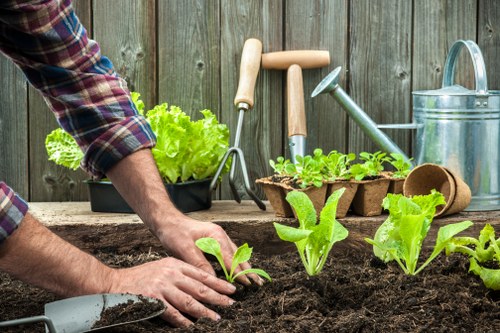
at Gardener Manor Park is more than a landfill alternative: it is a nutrient loop. We operate community compost bays and in-vessel composting for plant trimmings and separate food waste collected from park kiosks. This transforms organic matter into high-quality compost that is reused on-site in our flower borders and vegetable plots. The strategy helps rebuild soils, reduce reliance on chemical fertilizers and demonstrates how urban green spaces can incorporate sustainable rubbish gardening methods that nourish biodiversity.Our waste separation strategy mirrors borough-level policies: a strong emphasis on source segregation of organics, glass, mixed paper and card, metal and plastic packaging. We maintain clear, labelled receptacles and run seasonal campaigns to highlight what goes where — for example, food waste in brown bins, glass in clear-lidded containers, and residual waste in secure small-capacity bins to discourage disposal of recyclables. These practical measures help us reduce contamination and increase recycling rates across the park.
Fleet decarbonisation is a priority: our collections are increasingly made by low-carbon vans, including electric and hybrid models, and in some pedestrian zones by electric cargo bikes. These vehicles reduce emissions, noise and local air pollution while providing flexible collection services between the park, local transfer stations and charity partners. Route optimization software and consolidated collections further reduce mileage and emissions — delivering tangible reductions in our carbon footprint.
 We maintain a transparent monitoring and reporting framework to show progress toward our recycling percentage target. Data from on-site audits, transfer station records and charity partner receipts are used to calculate diversion rates, contamination levels and greenhouse gas savings. Public-facing dashboards and periodic community briefings (without contact or website details here) help keep neighbours informed about how the park is performing on sustainability and recycling initiatives.

What you can expect at Gardener Manor Park
Expect clearly signposted disposal points, community composting demonstrations, seasonal collection events diverting bulky items to charity, and a low-carbon vehicle fleet collecting materials for transfer to local sorting facilities. Our accepted materials include:- Food and garden organics for composting or AD
- Paper, card and mixed recyclables sorted for reprocessing
- Glass, tins and clean plastics for recycling
- Reusable items routed through charity partners
Gardener Manor Park's sustainability and recycling programme combines practical infrastructure, community partnership and operational innovation. By linking an eco-friendly waste disposal area with a thriving sustainable rubbish gardening area, engaging charities for reuse and running a growing fleet of low-carbon vans, we are closing material loops and building a model for other urban green spaces. We are committed to reaching and exceeding our recycling percentage target while supporting borough-wide efforts in waste separation and circular resource management — turning what used to be rubbish into resources for people and places.